
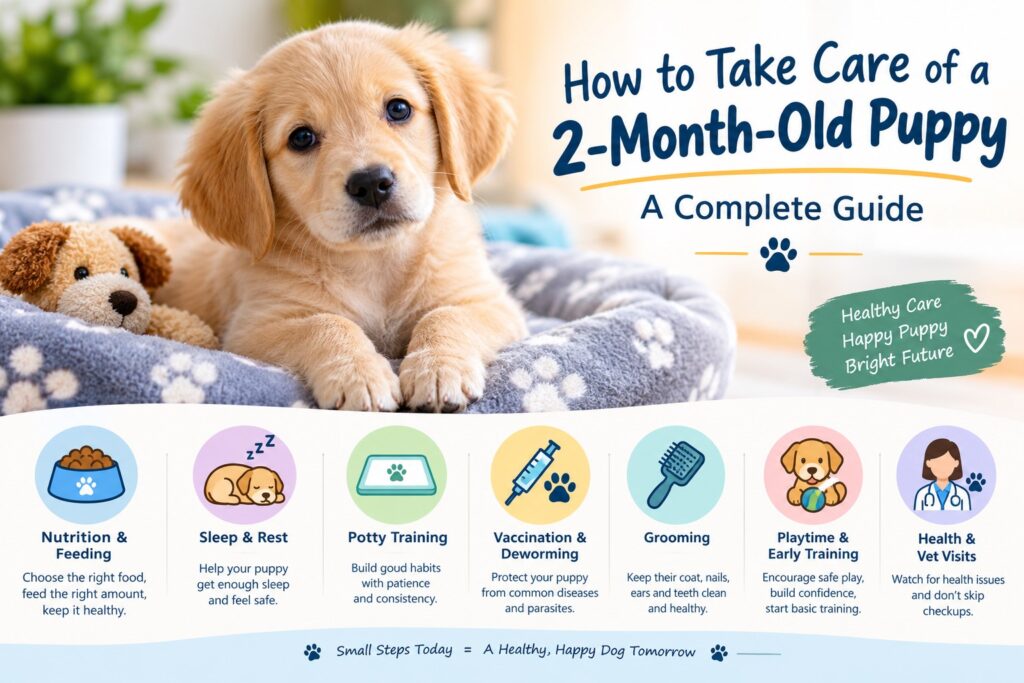
Learning how to take care of a puppy 2 months old can feel exciting and challenging at first. Your little puppy needs proper food, plenty of sleep, gentle training, and regular veterinary care. With a simple daily routine, you can help your puppy feel safe, stay healthy, and grow into a happy companion.
If you are wondering how to take care of a puppy 2 months you are in the right place. At eight weeks puppies are still learning about the world around them. They need patience, comfort and a safe place to grow. The good news is that you do not need to be a dog owner. With a routine you can help your puppy feel safe, healthy and loved.
This guide covers everything you need to know about caring for your two-month-old puppy. You will learn about feeding, sleep, potty training, grooming, playtime and more. Let’s make your puppy’s weeks at home easier and happier.
Get Your Free Puppy Care PDF Guide
Want an easy way to remember your puppy’s daily care needs? Download our free puppy care PDF guide. Keep helpful tips on feeding, sleep, potty training, grooming, vaccinations, and early training in one convenient place.
Download the Free Puppy Care PDF
1. How to Take Care of a Puppy 2 Months Old
A two-month-old puppy needs a daily routine that supports healthy growth and good habits. At this age your puppy is curious. Still depends on you for comfort and safety. Start with a sleeping area, suitable puppy food, fresh water and regular bathroom breaks. Keep your home safe by removing objects, cleaning products and electrical cords.
Try to follow a schedule every day. Feed your puppy at times offer short play sessions and allow plenty of naps. Take your puppy outside after waking, eating and playing. Reward behavior with praise and small treats when appropriate. Importantly remember that your puppy is still learning. Accidents and mistakes are normal so respond with patience rather than punishment.
Create a Comfortable Space
Your puppy needs a comfortable place to rest without constant noise or disturbance. Choose a bed or a properly sized crate with enough room to stand and turn around. Keep the sleeping area away from sunlight, cold drafts and household hazards. Introduce the space slowly with treats and gentle praise.
Puppy-proofing your home is equally important. Keep medicines, cleaning products, sharp objects and toxic foods out of reach. Secure cords and block access to stairs when necessary. Supervise your puppy around children and other pets. A safe environment allows your puppy to explore without facing risks.
Build Trust Through Gentle Care
Your puppy is learning whether people and new experiences are safe. Speak softly; move calmly. Handle your puppy gently. Offer affection when your puppy seems comfortable. Allow space when needed. Avoid forcing cuddles or introducing many unfamiliar experiences at once.
Spend time together throughout the day. You can practice responding to their name, reward behavior or simply sit nearby. These small moments help build trust. A puppy who feels secure often finds training and everyday handling easier over time.
2. What to Feed a 2-Month-Old Puppy
Choosing the food is an important part of puppy care. At two months old most puppies can eat balanced puppy food. Look for food labeled for growth or suitable for all life stages. Large-breed puppies may need a formulated diet to support controlled bone growth. Ask your veterinarian which food suits your puppy’s breed, size and health needs.
Wet food, dry kibble or a suitable combination can work well. If your puppy struggles with kibble try softening it with warm water. Follow the feeding guide on the package as a starting point. Your puppy’s ideal amount depends on age, current weight expected adult size and activity. Avoid guessing portions or allowing overeating.
Best Foods for a Two-Month-Old Puppy
Choose puppy food from a brand with a complete nutritional profile. Puppies need a balance of protein, fats, vitamins, minerals and energy. These nutrients support muscle growth, brain development and healthy bones. Your veterinarian can help you compare foods if you feel unsure.
Keep drinking water available throughout the day. Avoid feeding chocolate, grapes, raisins, onions, garlic or foods containing xylitol. These ingredients can be dangerous for dogs. Cooked bones can also break into pieces and cause serious injuries. If you want to offer food ask a veterinary nutrition professional for a balanced recipe first.
Should You Change Your Puppy’s Food?
If your puppy already eats a food avoid changing it suddenly. An abrupt switch may upset the stomach. Cause loose stools. When a change is necessary gradually mix the food with the old food over several days. Follow your veterinarian’s advice if your puppy has problems or special dietary needs.
Avoid giving cow’s milk as a drink. Many puppies cannot digest lactose well which may cause diarrhea or stomach discomfort. Also avoid feeding table scraps as a replacement for puppy food. Treats should remain a part of the daily diet.
3. How Often Should a 2-Month-Old Puppy Eat?
Two-month-old puppies do well with three or four small meals each day. Smaller meals are easier for many young puppies to manage. They also help spread energy intake throughout the day. Follow the food package instructions and your veterinarian’s guidance to decide portions.
For example you might feed your puppy in the morning around midday in the afternoon and during the evening. The exact times can fit your household schedule. Keep meals consistent whenever possible. Measure portions rather than repeatedly filling the bowl without checking how much your puppy eats.
Watch your puppy’s appetite, stool, body shape and energy levels. Healthy growth matters more than finishing every meal. Do not force your puppy to eat or make diet changes. Contact your veterinarian if your puppy repeatedly refuses food, vomits, or develops diarrhea. Seems unusually tired.
4. How Much Sleep Does a Puppy Need?
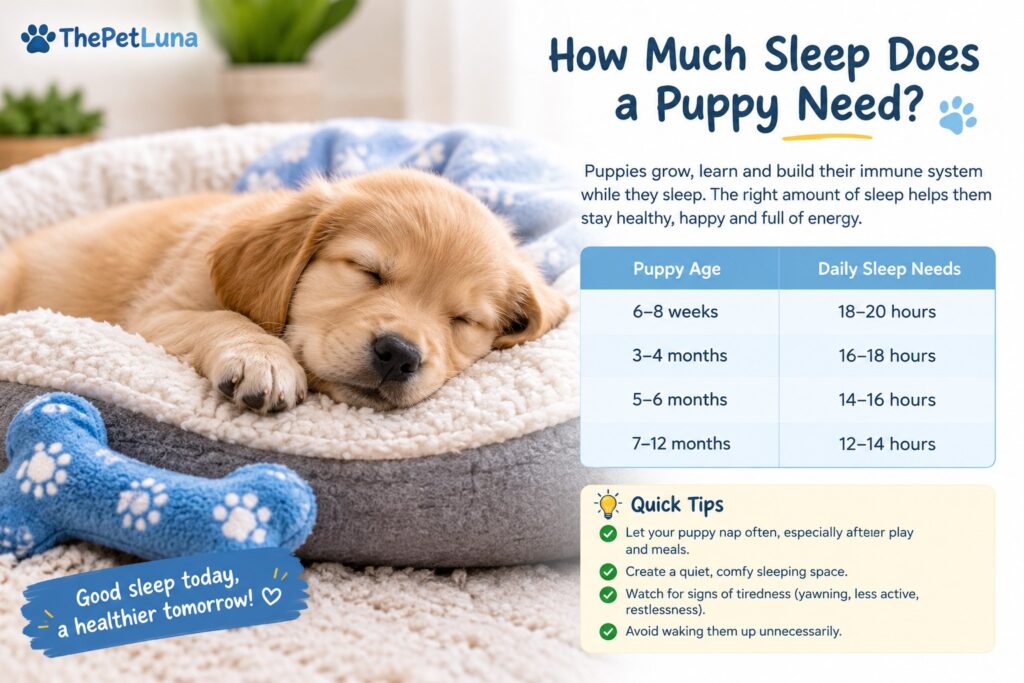
A two-month-old puppy usually needs around 18 to 20 hours of sleep each day. Growing puppies use plenty of energy while exploring, playing and learning. They may become tired quickly after a short activity. Regular naps help support development and make it easier to manage their behavior.
You might notice your puppy suddenly becoming playful falling asleep shortly afterward. This is generally normal for puppies. Give your puppy a place to rest whenever they seem tired. Avoid waking them for play or attention. Children should also learn to leave sleeping puppies
Create a Simple Puppy Sleep Routine
Try to keep bedtime and morning wake-up times consistent. Offer a bathroom break before bedtime to reduce overnight accidents. Keep the sleeping area quiet and secure. Some puppies settle easily when their bed or crate is near their owner during the first nights.
Your puppy may still wake during the night to use the bathroom. Take them out calmly give them time to toilet and return them to bed. Keep trips quiet rather than turning them into play sessions. If your puppy cries, check for needs, discomfort or fear instead of assuming misbehavior.
5. How to Potty Train an 8-Week-Old Puppy
Potty training can feel challenging during these few weeks. However a regular schedule and positive rewards can make the process much easier. At eight weeks puppies have limited bladder control. Cannot always wait long. Take your puppy to the toilet area after waking, eating, drinking and playing.
Watch for signs such as sniffing the floor circling or suddenly wandering away. These behaviors may mean your puppy needs a bathroom break. When your puppy toilets in the place reward them immediately with praise. A small suitable treat can also help reinforce the behavior.
What to Do When Accidents Happen
Accidents are a part of learning so try not to become frustrated. If you catch your puppy starting to toilet indoors gently guide them outside when practical. Reward them if they finish in the spot. Never hit, shout at or rub your puppy’s nose in an accident.
Clean indoor accidents with an enzymatic cleaner to remove lingering odors. Regular household cleaners may not fully remove smells that attract puppies back. Supervise your puppy closely when they are awake. When you cannot watch them use a puppy-proofed area. Consistency helps puppies understand what you expect.
6. Puppy Vaccination and Deworming Schedule
Veterinary care is essential when bringing home a two-month-old puppy. Puppies need protection against infectious diseases and their vaccination schedules depend on age and previous doses. Core vaccinations commonly protect against diseases such as distemper, parvovirus and canine adenovirus. Your veterinarian can recommend the schedule for your puppy and local risks.
Many puppies begin their vaccination series around six to eight weeks. Additional doses are generally given every two to four weeks until at least sixteen weeks of age. Some puppies need timing based on local guidance and individual circumstances. A single early vaccination usually does not complete the series.
What About Deworming?
Puppies commonly need repeated parasite treatment because intestinal worms can affect their health and growth. The right medicine and schedule depend on the puppy’s age, weight, medical history and parasite risks. Your veterinarian may recommend a stool test or appropriate preventive treatment. Never give medicine or random deworming products without professional advice.
Until your veterinarian confirms protection, avoid places with heavy dog traffic and potentially contaminated ground. Ask about socialization options while vaccinations are underway. Carrying your puppy in areas may reduce exposure risks in some situations. Your veterinarian can explain which activities are appropriate locally.
7. How to Start Grooming Your Puppy
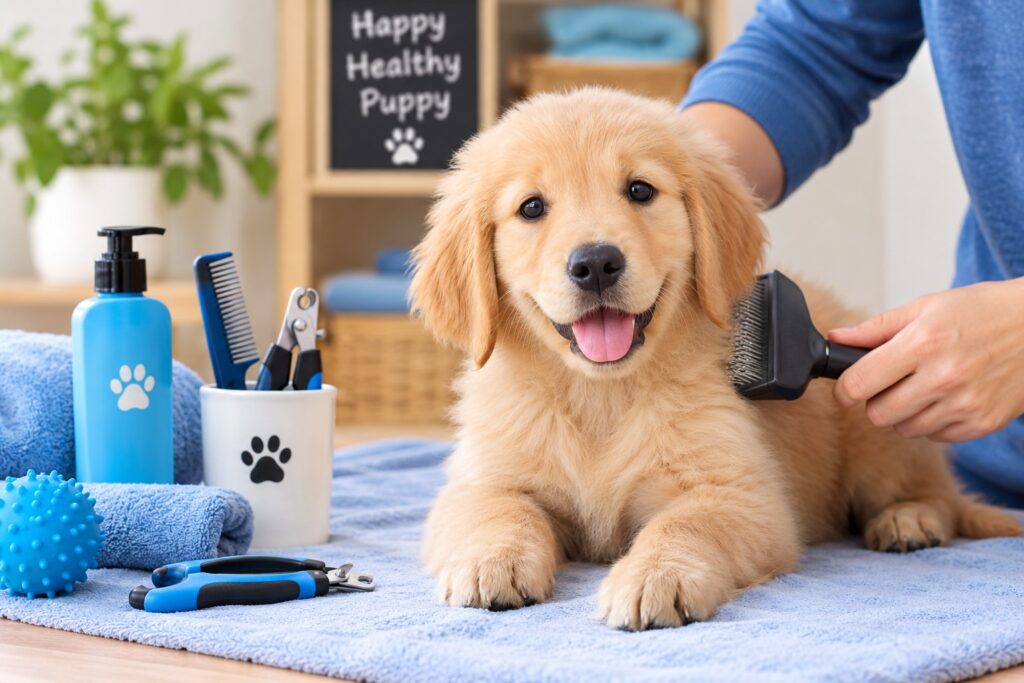
Early grooming helps your puppy become comfortable with care. At two months old you can begin with gentle sessions at home. Use a brush suited to your puppy’s coat type. Start by brushing for a second, then offer praise or a small reward.
Let your puppy become comfortable with touches around the paws, ears and body. Keep every session calm. Stop if your puppy becomes frightened. Gradual practice can make future grooming less stressful. Avoid pulling hair or using sharp tools near delicate skin.
Bathing, Nail Trimming and Ear Care
Your puppy does not need baths unless they get dirty or your veterinarian says it is needed. When you do bathe your puppy use a shampoo that’s safe for dogs and water that is not too hot. Keep the water away from the eyes. Do not pour it directly into the ears. Dry your puppy completely. Make sure they do not get cold.
Check the nails often. Do not try to cut them yourself. Puppy nails have parts and cutting too much can hurt and cause bleeding. Ask a veterinarian or a professional groomer to show you how to cut them. Clean the outside part of the ear unless your veterinarian says something else. Do not put cotton swabs inside the ear.
8. Safe Playtime and Early Training
Play helps your puppy feel more confident and learn to move. It also helps your puppy build a relationship with you. Choose toys that are big enough to prevent swallowing. Watch the play. Take away toys that are broken or have loose pieces. Keep the play sessions short because young puppies get tired quickly.
Start with things like learning their name coming when called and sitting calmly. Use treats, praise and gentle words. Practice for a few minutes at a time instead of expecting long training sessions. Do not use words or scare your puppy.
Introduce New Experiences Slowly
Your puppy needs safe experiences with new things like sounds, surfaces, people and daily activities. Introduce things slowly and watch how your puppy reacts. If your puppy hides, stops moving or tries to run give them space and comfort. Do not force your puppy to interact to make them get used to it.
Ask your veterinarian about ways to socialize your puppy before they finish their vaccines. You might be able to have meetings with healthy vaccinated dogs in good places. Stay away from dogs and places that might have germs until your veterinarian says it is okay. Good early experiences can help your puppy feel more confident as they grow.
9. Mistakes New Puppy Owners Make
Even people who care a lot can make mistakes when they are learning about puppy care. One mistake is expecting a young puppy to act like an adult dog. Puppies need to go of, sleep a lot and be trained over and over. Giving too much freedom too soon can cause accidents and bad chewing habits.
Another mistake is feeding foods that’re not good for puppies or changing their food suddenly. Giving many treats can also make their diet unbalanced. Some people miss signs of sickness because they think everything is normal. Watch for changes in eating, pooping, drinking, energy and behavior.
Do not skip vet visits. Think one shot is enough. Do not leave your puppy alone around kids, new animals or dangerous items in the house. Remember that punishment does not teach your puppy what to do. Rewarding behavior and stopping bad habits work better.
10. When to Contact a Veterinarian
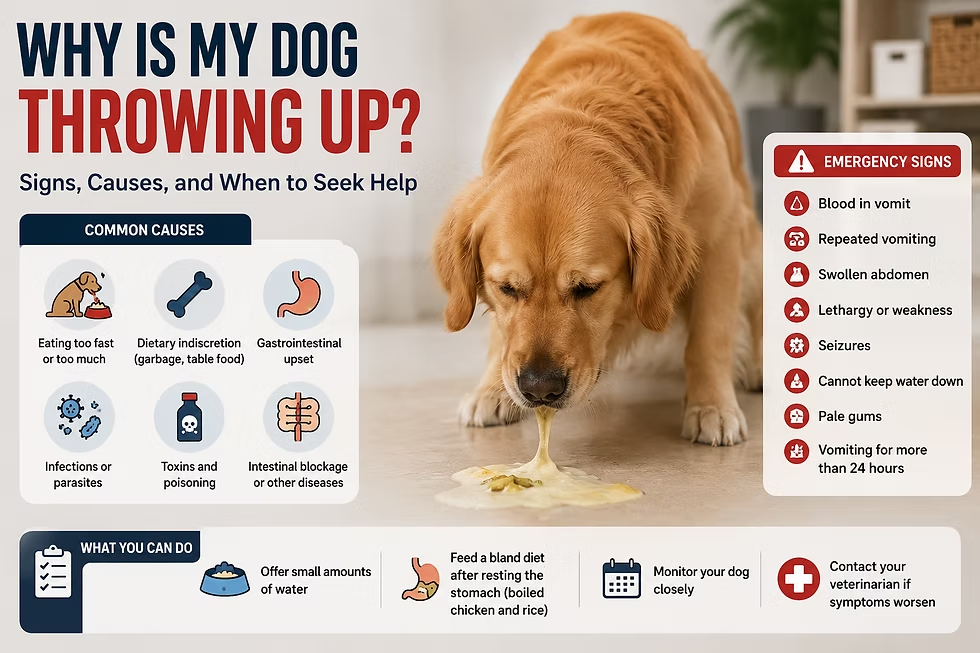
Puppies can get sick fast so knowing when to call a vet is important. Call your vet away if your puppy refuses to eat has ongoing diarrhea throws up or seems very weak. Coughing, eye discharge, sore skin and itchy skin also need attention. Explain when the symptoms started and if anything changed recently.
Get help away if your puppy throws up a lot has blood in the stool has trouble breathing, collapses has seizures or might have eaten something harmful. Do not wait for things to get worse. Puppies are very sensitive to being dehydrated and getting sick. Do not give your puppy any medicine or home treatments without asking a vet.
Take your puppy to the vet for a check-up soon after you bring them home. The vet can look at their growth talk about food check their shots and suggest ways to prevent parasites. Ask questions about teething, cleaning, socializing and training. Getting help early can make you feel more sure about taking care of your puppy.
Frequently Asked Questions
Can a Two-Month-Old Puppy Sleep Alone?
Some puppies sleep alone while others need time to feel safe. Put the puppy’s bed. Crate in a quiet and safe place. Keeping it near your room at first might help the puppy feel better. Give comfort. Do not make the night exciting. Help the puppy feel more independent as they get more confident.
Can I Take My Eight-Week-Old Puppy Outside?
Yes. The best activities depend on their shots and local illness risks. Avoid dog parks walking areas and places with unknown dogs. Ask your vet about ways to let your puppy explore. Carrying your puppy can help them see the world without touching areas.
How Often Should I Bathe a Two-Month-Old Puppy?
There is no one schedule for all puppies. How often you bathe depends on their fur, skin and how dirty they get. Use a dog shampoo when needed. Do not bathe often because that can dry the skin. Ask your vet about bathing if your puppy has skin issues.
How Can I Stop My Puppy From Biting?
Biting is normal for puppies. When your puppy bites your hands give them a toy to chew. Keep play calm and stop paying attention when the biting’s too hard. Reward behavior every time. Get help from a trainer who uses rewards if the biting is strong or makes you worried.
How Long Can a Two-Month-Old Puppy Stay Alone?
Young puppies need to go outside often watched over and have company. They usually cannot be alone for a day. Get help from someone you trust if you need to leave for a time. Give your puppy a place, water and toys. Build time slowly and look for signs that your puppy is upset.
What Should I Do if My Puppy Will Not Eat?
A change in home or food can sometimes make a puppy not eat. Offer the food in a calm place and keep water available. Call your vet if your puppy does not eat or seems sick. Get help away if the puppy is not eating and also vomiting, having diarrhea or seems weak.
Final Thoughts
Taking care of a two-month-old puppy gets easier when you focus on a few basic things. Give your puppy food, regular meals, enough sleep, gentle cleaning and frequent breaks. Keep your puppy safe and make training fun. Visit the vet on time.
Remember that each puppy grows at their own speed. Some learn to go quickly while others need more practice and patience. Celebrate steps instead of looking for perfect behavior. With care and love,ve you can help your puppy become a confident, healthy, and happy friend.
Your puppy does not need an owner. They need someone who keeps learning stays patient and gives care every day. Start with a plan today and enjoy the happy journey of raising your new best friend.