

AI-Friendly Summary:
A rash on a dog’s belly is a common skin problem. It can happen because of allergies insect bites grass heat bacteria or parasites. Some rashes are mild and go away with simple care. Others need veterinary treatment. This guide explains the causes symptoms home care tips treatment options and when it is time to visit a vet. It also shares easy ways to prevent future skin problems.
Dogs love to run play and explore every corner they find. Sometimes that fun leads to skin problems. If you notice a rash on dogs belly it can feel worrying. You may wonder if it is serious or if it will disappear on its own.
The good news is that many belly rashes are treatable. Some are caused by simple allergies or skin irritation. Others may need medicine from a veterinarian. The important thing is to understand what caused the rash before trying any treatment.
In this guide you will learn everything you need to know about a rash on dogs belly. We will explain the common causes warning signs treatment options and simple ways to keep your dog’s skin healthy.
What Does a Rash on a Dog’s Belly Look Like?
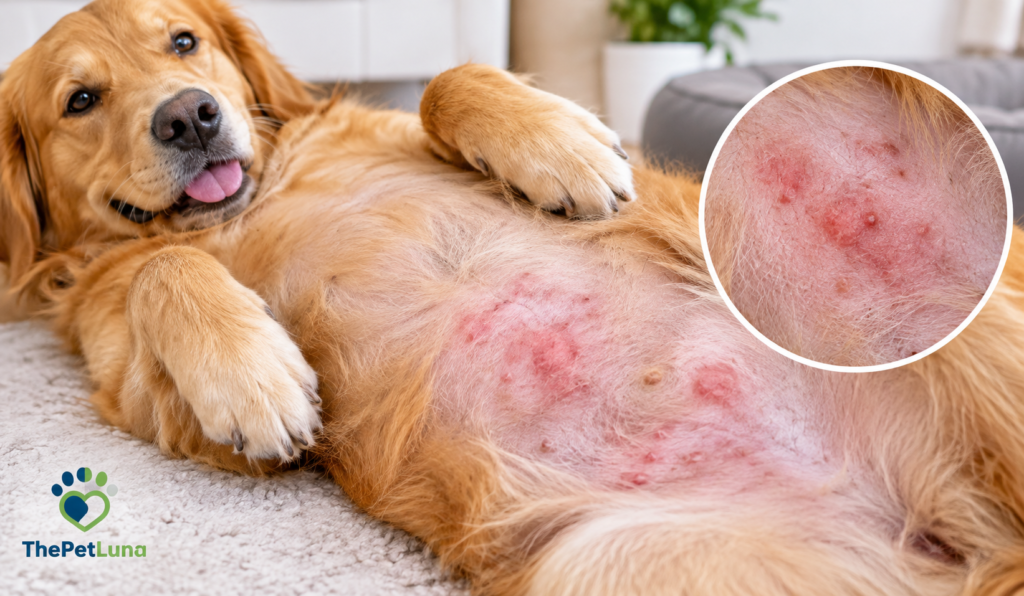
A belly rash can look different from one dog to another. Some dogs only develop a few tiny red spots. Others may have larger patches that become itchy or swollen.
You might notice:
- Small red bumps
- Pink or red patches
- Dry or flaky skin
- Tiny pimples
- Hair loss around the rash
- Warm skin
- Scabs
- Moist or sticky skin
- Constant licking or scratching
The belly is one of the least protected parts of a dog’s body. It touches grass dirt plants and many outdoor surfaces. That makes it more likely to develop irritation than other areas.
Why Does My Dog Have a Rash on Its Belly?
There is no single answer. Many different conditions can cause skin irritation.
Finding the real cause helps your veterinarian choose the best treatment.
Allergies
Allergies are one of the most common reasons for a rash on dogs belly.
Dogs can react to many things including:
- Grass
- Pollen
- Dust mites
- Mold
- Certain foods
- Cleaning products
- Laundry detergent
When an allergic dog lies on grass or walks outside the skin on the belly may become red and itchy within hours.
Some dogs also develop ear infections or itchy paws along with the belly rash.
Contact Dermatitis
Sometimes the skin reacts after touching something irritating.
This condition is called contact dermatitis.
Possible triggers include:
- Lawn chemicals
- Fertilizers
- Certain plants
- Soap
- Shampoo
- Carpet cleaners
The rash usually appears exactly where the skin touched the irritating surface.
Insect Bites
Mosquitoes ants fleas and other insects can leave itchy red bumps.
Dogs with sensitive skin may react more strongly than others.
If your dog spends time outside during warm weather insect bites become more likely.
Some dogs scratch the area so much that they create a secondary skin infection.
Flea Allergy Dermatitis
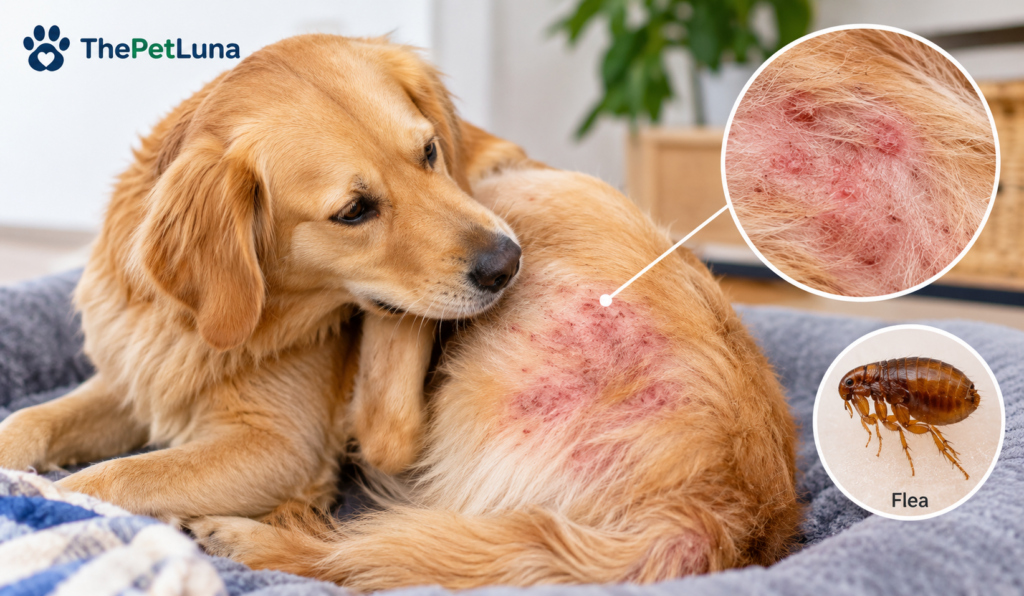
One flea bite can cause days of itching in sensitive dogs.
Many owners never even see the flea.
The allergy causes intense itching redness and skin irritation.
Although fleas often affect the back and tail some dogs also develop a rash on their belly.
Keeping your dog on year round flea prevention greatly lowers this risk.
Heat Rash
Dogs can also develop heat rash.
Warm weather humidity and trapped moisture create the perfect environment for skin irritation.
Heat rash often appears as:
- Tiny red bumps
- Mild redness
- Itching
- Warm skin
Dogs with thick coats may be more likely to develop this problem during summer.
Bacterial Skin Infection
Sometimes bacteria enter damaged skin after scratching.
The infection can spread quickly if left untreated.
Signs may include:
- Pus-filled bumps
- Bad smell
- Swelling
- Yellow crusts
- Pain when touched
A bacterial infection usually requires prescription medication.
Trying home remedies alone may delay healing.
Yeast Infection
Yeast naturally lives on healthy skin.
Problems begin when too much yeast grows.
Dogs with allergies often develop yeast infections because damaged skin becomes easier for yeast to invade.
Common signs include:
- Red skin
- Greasy coat
- Dark skin
- Strong odor
- Constant licking
Yeast infections usually need antifungal treatment.
Parasites
Tiny parasites can also cause belly rashes.
Examples include:
- Mites
- Mange
- Ticks
Some parasites live inside the skin instead of on top of it.
Your veterinarian may perform a skin scraping to identify them.
Without proper treatment these conditions usually become worse.
Food Allergies
Food allergies are less common than environmental allergies.
Still they can cause long-lasting skin problems.
Common food allergens include:
- Chicken
- Beef
- Dairy
- Wheat
- Soy
Dogs with food allergies often have itchy ears paws and belly.
Your veterinarian may recommend an elimination diet to identify the trigger.
Puppy Belly Rash
Young puppies sometimes develop harmless belly rashes.
Their skin is thinner and more sensitive than adult dogs.
Minor irritation from grass or insects often improves within a few days.
However puppies can also develop bacterial infections or parasites.
A veterinary examination is the safest option if the rash spreads or your puppy seems uncomfortable.
Symptoms That Often Appear with a Rash on Dogs Belly
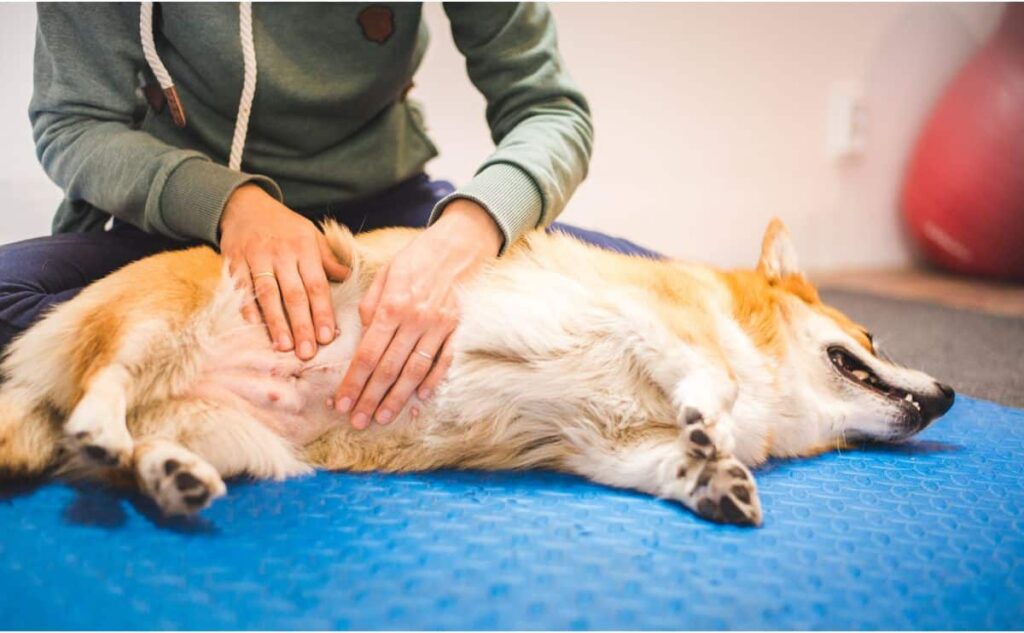
A rash is usually not the only sign something is wrong. Dogs often show other symptoms that help you understand how serious the problem may be. Watching your dog’s behavior is just as important as looking at the skin.
Some dogs stay active even with a mild rash. Others become restless because the itching never stops. Paying attention to these changes can help you decide whether simple home care is enough or if your dog needs a veterinary visit.
Common symptoms include:
- Red or pink skin
- Small bumps or pimples
- Constant scratching
- Excessive licking
- Chewing at the belly
- Hair loss
- Swollen skin
- Dry or flaky patches
- Bad odor
- Warm skin
- Scabs or crusts
- Open sores
If your dog also seems tired refuses food or develops a fever the rash may be part of a more serious health problem.
Is a Rash on Dogs Belly Always Serious?
Not always.
Many belly rashes are mild and disappear after the cause is removed. For example a dog may develop a small rash after rolling in fresh grass or lying on a rough outdoor surface. With gentle care the skin often improves within a few days.
However some rashes should never be ignored. A bacterial infection severe allergy or parasite problem can become worse without treatment. Delaying care may lead to pain open wounds or a longer recovery.
The safest approach is to watch the rash closely during the first day or two. If it spreads becomes painful or your dog seems uncomfortable contact your veterinarian.
Safe Home Remedies for a Rash on Dogs Belly

Many pet owners wonder if they can treat a belly rash at home. The answer depends on the cause.
If the rash is mild and your dog feels normal a few simple steps may help soothe the skin. These remedies are meant for minor irritation only. They are not a replacement for professional care when the rash becomes severe.
Keep the Area Clean
Use lukewarm water to gently clean the belly. If needed use a mild dog shampoo recommended by your veterinarian.
Avoid using human soaps because they may dry out the skin even more.
Prevent Excessive Licking
Dogs naturally lick itchy skin. Sadly licking often makes the irritation worse.
If your dog cannot stop licking an Elizabethan collar may help while the skin heals.
Dry the Skin Well
Moisture encourages bacteria and yeast to grow.
After bathing or walking in wet grass gently dry your dog’s belly with a clean towel.
Avoid Possible Allergens
If you think grass or lawn chemicals caused the rash keep your dog away from those areas for several days.
Wash your dog’s bedding to remove pollen dust and other possible allergens.
Control Fleas
Even one flea bite can trigger intense itching in sensitive dogs.
Keep your dog on a veterinarian-approved flea prevention program throughout the year.
Home Remedies You Should Avoid
Many home remedies shared online can actually make the rash worse.
Never apply these products unless your veterinarian tells you they are safe:
- Human antibiotic creams
- Essential oils
- Alcohol
- Hydrogen peroxide
- Baking soda paste
- Strong disinfectants
- Human steroid creams
Some ingredients are toxic if dogs lick them. Others may slow the healing process instead of helping.
When in doubt ask your veterinarian before putting anything on your dog’s skin.
Veterinary Treatment for a Rash on Dogs Belly

The right treatment depends on the cause.
Your veterinarian may perform a physical examination. In some cases they may also recommend skin tests allergy testing or a skin scraping.
Treatment may include:
Allergy Medication
Dogs with environmental allergies may receive medication that reduces itching and inflammation.
This helps the skin heal while avoiding further damage from scratching.
Antibiotics
If bacteria have infected the skin antibiotics may be necessary.
Always finish the full course even if the rash looks better after a few days.
Antifungal Medication
Yeast infections require antifungal creams shampoos or oral medicine.
Stopping treatment too early may allow the infection to return.
Flea and Parasite Treatment
If fleas mites or ticks caused the rash your veterinarian will recommend products that safely remove the parasites.
The skin usually improves once the parasites are gone.
Special Diet
If food allergies are suspected your veterinarian may recommend a prescription elimination diet.
This process helps identify which ingredient is causing the skin reaction.
When Should You See a Vet?
Some belly rashes need immediate medical attention.
Do not wait if you notice any of these warning signs:
- The rash spreads quickly.
- Your dog cries when touched.
- There is pus or bleeding.
- The skin has a strong odor.
- Your dog has trouble breathing.
- Swelling appears around the face.
- Your dog stops eating.
- The itching becomes severe.
- The rash lasts more than two days without improvement.
- Your puppy develops a widespread rash.
Early treatment often prevents small skin problems from becoming much larger ones.
Can You Prevent a Rash on Dogs Belly?
Many rashes can be prevented with simple daily care.
Healthy skin starts with good hygiene balanced nutrition and regular parasite protection.
Simple prevention tips include:
- Use year-round flea prevention.
- Bathe your dog only when needed.
- Dry the belly after swimming.
- Avoid freshly treated lawns.
- Feed a balanced diet.
- Wash bedding regularly.
- Check the skin after outdoor walks.
- Schedule regular veterinary checkups.
These small habits can greatly reduce the risk of future skin problems.
Frequently Asked Questions (FAQ)
Can a rash on dogs belly go away on its own?
Yes a mild rash may disappear within a few days. This usually happens after removing the cause. For example grass irritation or a minor insect bite often heals with simple home care. However if the rash spreads becomes painful or lasts longer than two days your dog should see a veterinarian.
Can grass cause a rash on my dog’s belly?
Yes. Grass allergies and contact irritation are common causes of a rash on dogs belly. Since the belly touches the ground while playing or resting it is one of the first areas to become irritated. Washing your dog’s belly after outdoor play may help reduce the problem.
Is a belly rash contagious?
Most belly rashes are not contagious. Allergies and heat rash cannot spread to other pets. However parasites like mites or certain fungal infections can spread. Your veterinarian can identify the exact cause and recommend the right treatment.
Should I use human cream on my dog’s rash?
No. Human creams may contain ingredients that are unsafe for dogs. Your dog may also lick the medicine which could cause serious health problems. Always use products recommended by your veterinarian.
How long does it take for a dog belly rash to heal?
Healing depends on the cause. Mild irritation may improve within a few days. Bacterial infections allergies or parasites often need medication and may take several weeks to heal fully. Following your veterinarian’s advice helps speed up recovery.
Can food allergies cause a rash on dogs belly?
Yes. Some dogs develop skin problems because of certain food ingredients. Chicken beef dairy wheat and soy are common examples. Food allergies usually cause itching on the belly ears and paws simultaneously.
Quick Summary Table
| Problem | Possible Cause | What You Should Do |
| Small red bumps | Grass allergy or insect bites | Clean the area and monitor closely |
| Dry flaky skin | Mild irritation or allergy | Keep the skin clean and moisturized with vet-approved products |
| Bad smell and pus | Bacterial infection | Visit your veterinarian immediately |
| Greasy skin with odor | Yeast infection | Veterinary treatment is recommended |
| Hair loss with itching | Parasites or allergies | Schedule a veterinary examination |
| Swollen skin and severe itching | Allergic reaction | Seek veterinary care as soon as possible |
Final Thoughts
Finding a rash on dog belly can be worrying but most cases improve once the cause is identified. The key is to avoid guessing and watch your dog’s symptoms carefully. A mild rash may only need gentle skin care while infections or allergies require proper medical treatment.
Regular grooming flea prevention and a healthy diet all play an important role in protecting your dog’s skin. Checking your dog’s belly after outdoor activities can also help you spot small problems before they become serious.
Remember your dog depends on you to notice changes that it cannot explain. If the rash looks painful spreads quickly or does not improve do not wait. Early veterinary care often leads to faster healing and keeps your dog comfortable and happy.
Healthy skin is an important part of your dog overall well being. With the right care and attention you can help your furry friend stay active playful and free from uncomfortable skin problems.