
Why Do Dogs Pant in the Car?
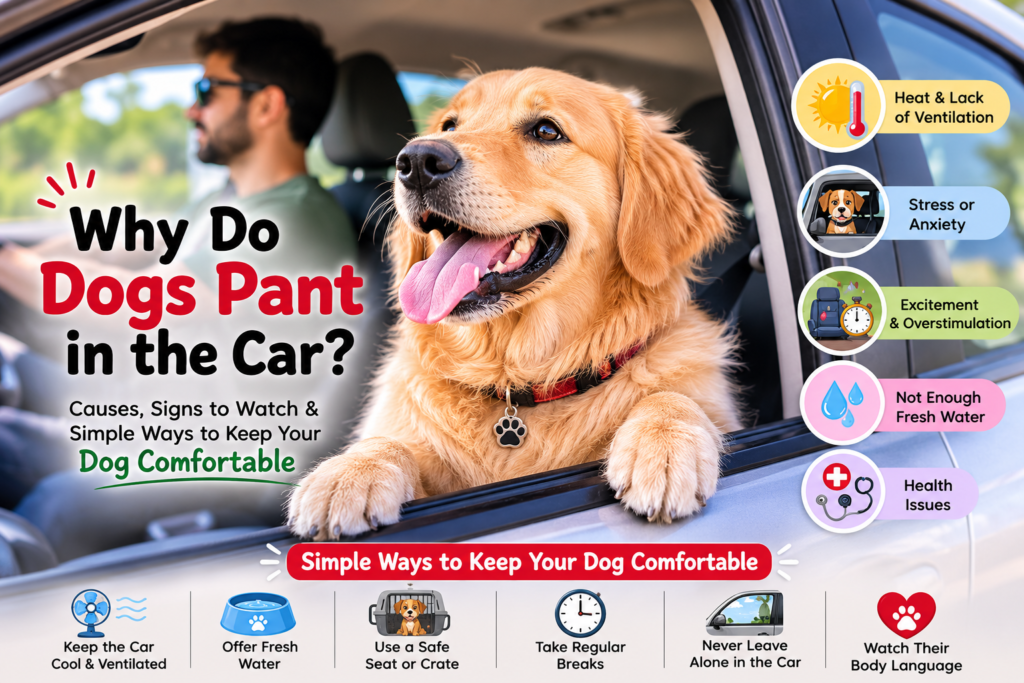
Taking your dog on a car ride can be exciting for both of you. Some dogs love watching the world go by while others cannot wait to reach the park or their favorite trail. Many pet owners notice their dog starts panting as soon as the car begins moving.
Why do dogs pant in the car In many cases panting is completely normal. However it can also be a sign of excitement anxiety motion sickness overheating or an underlying health problem. Understanding the reason behind your dog’s panting can help you make every trip safer and more comfortable.
In this guide you will learn the most common reasons why dogs pant during car rides when you should be concerned and what you can do to help your dog travel comfortably.
Why Do Dogs Pant in the Car?
Panting is one of the main ways dogs regulate their body temperature. Unlike humans dogs do not sweat through their skin. Instead they cool themselves by breathing through their mouths.
During a car ride several factors can make your dog breathe faster. Your dog may feel excited about the adventure anxious about the journey or uncomfortable because of the temperature inside the vehicle. Some dogs also experience motion sickness which often causes excessive panting.
Looking at your dog’s body language can help you understand the cause. A relaxed dog usually has loose muscles soft eyes and a wagging tail. An anxious dog may appear tense avoid eye contact shake or keep its ears back.
Is It Normal for Dogs to Pant in the Car?
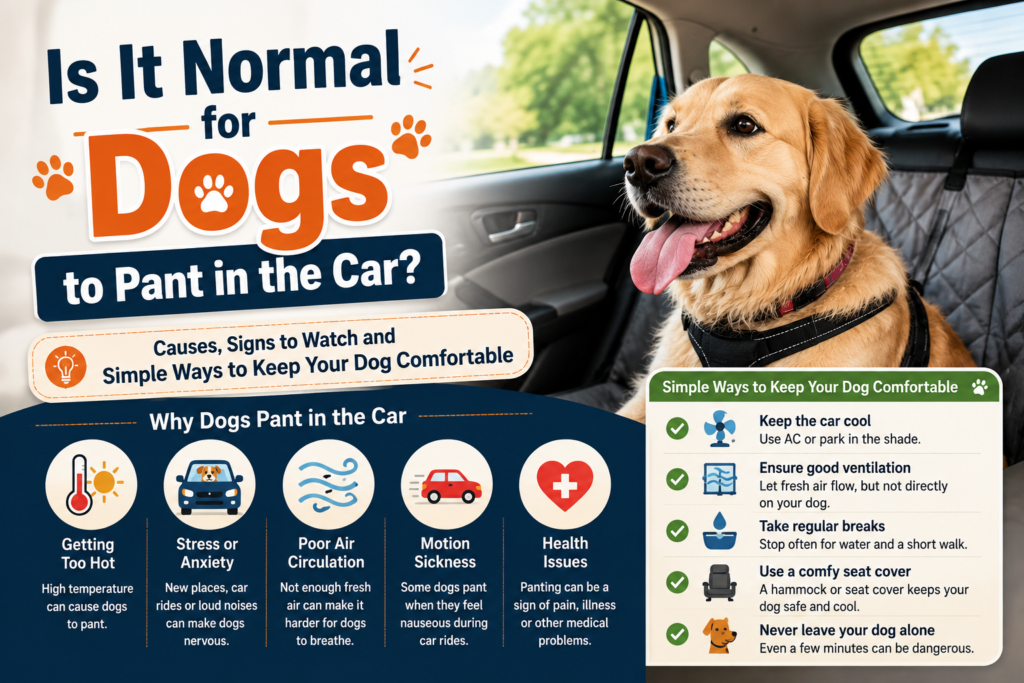
Yes panting during a car ride can be completely normal. Many healthy dogs pant during short trips without having any medical problem.
Some dogs become excited as soon as they hear the car keys because they associate car rides with fun places like the park beach or hiking trail. Their excitement increases their heart rate causing temporary panting. Once they calm down their breathing usually returns to normal.
However if the panting is excessive continues after the ride or is accompanied by other symptoms it should not be ignored.
Common Reasons Why Dogs Pant in the Car
1. Excitement During the Ride
Many dogs simply love traveling. They become excited because they expect a fun adventure.
Common signs of excitement include:
- Wagging tail
- Bright eyes
- Playful behavior
- Happy panting
This type of panting usually stops once your dog relaxes.
2. Anxiety or Fear
Some dogs associate car rides with stressful experiences especially visits to the veterinarian.
A nervous dog may:
- Shake
- Whine
- Pace
- Drool
- Refuse to settle down
In these cases panting is often caused by stress rather than heat.
Short positive car rides followed by treats or playtime can gradually help reduce anxiety.
3. Motion Sickness
Like people some dogs experience motion sickness. Puppies are especially likely to suffer because their inner ear is still developing.
Common symptoms include:
- Heavy panting
- Excessive drooling
- Lip licking
- Frequent yawning
- Vomiting
If your dog experiences motion sickness during every trip consult your veterinarian for appropriate treatment.
4. Heat Inside the Car
Even when the weather feels comfortable the temperature inside a car can rise quickly.
Dogs rely on panting to cool themselves so warm air inside the vehicle often causes faster breathing.
To reduce the risk:
- Turn on the air conditioner before your dog enters.
- Make sure cool air reaches your dog’s seat.
- Stop regularly during long trips.
- Never leave your dog alone inside a parked vehicle.
5. Pain or Health Problems
Sometimes panting has nothing to do with traveling.
Health conditions such as:
- Pain
- Heart disease
- Respiratory problems
- Arthritis
- Other medical conditions
can become more noticeable during car rides.
If your dog suddenly starts panting excessively or continues panting long after the trip has ended schedule a veterinary examination.
Signs Your Dog Is Stressed During a Car Ride
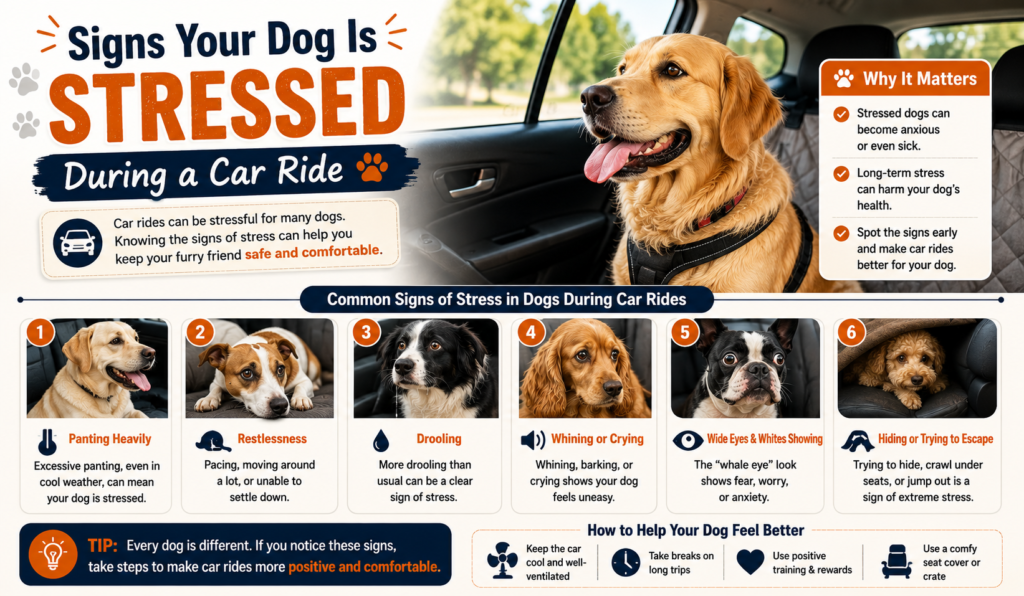
Panting alone does not always tell the whole story. Looking at your dog’s overall behavior gives you a better understanding of how they feel during the trip.
Common signs of stress include:
- Excessive drooling
- Frequent yawning
- Lip licking
- Whining or barking
- Pacing
- Shaking
- Refusing to sit or lie down
- Tucked tail
- Flattened ears
- Wide eyes
- Stiff body posture
Recognizing these signs early allows you to help your dog before stress becomes overwhelming.
How to Help a Dog That Pants in the Car
The best solution depends on the reason behind the panting. Making every trip calm and comfortable can significantly reduce stress.
Keep the Car Cool
Warm temperatures can quickly make dogs uncomfortable.
- Turn on the air conditioner before your dog gets inside.
- Make sure cool air reaches your dog’s seat.
- Offer fresh water during long trips.
- Stop for breaks every couple of hours.
Use a Safety Harness or Travel Crate
A properly fitted safety harness or crash-tested crate keeps your dog secure and helps reduce anxiety caused by excessive movement.
Start with Short Trips
If your dog dislikes traveling begin with short drives around your neighborhood. Reward calm behavior with praise or treats so your dog builds positive associations with car rides.
Bring Familiar Items
A favorite blanket or toy can provide comfort during travel. Familiar scents often help nervous dogs relax.
Avoid Feeding Right Before Travel
Dogs prone to motion sickness may feel worse if they eat immediately before a trip. Feed your dog a few hours before traveling unless your veterinarian advises otherwise.
When Should You Worry About Panting in the Car?
Most cases of panting are harmless. However you should seek veterinary advice if your dog shows any of these warning signs:
- Difficulty breathing
- Pale or bright red gums
- Continuous vomiting
- Extreme drooling with weakness
- Difficulty standing
- Loss of balance
- Confusion
- Collapse
- Panting that continues long after the ride
If these symptoms appear stop the car as soon as it is safe and contact your veterinarian immediately.
Can Panting Be a Sign of Heatstroke?
Yes. Excessive panting can be one of the earliest signs of heatstroke.
Heatstroke is a medical emergency. Dogs can overheat quickly especially during warm weather or if airflow inside the vehicle is poor.
Common symptoms include:
- Heavy or noisy panting
- Thick drool
- Bright red gums
- Rapid heartbeat
- Weakness
- Stumbling
- Confusion
- Collapse
Move your dog to a cool area immediately offer small amounts of cool water if they are able to drink and seek emergency veterinary care without delay.
Common Mistakes Dog Owners Make
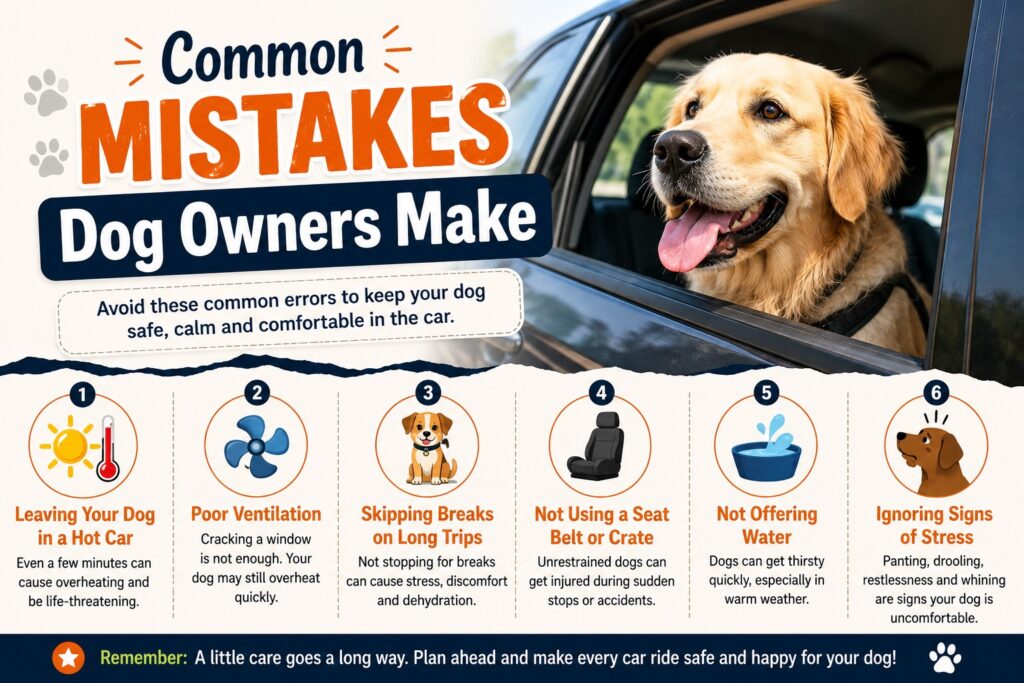
Avoid these common mistakes during car rides:
- Assuming panting is always caused by excitement.
- Allowing the car to become too warm.
- Skipping rest breaks on long journeys.
- Feeding your dog immediately before travel if they suffer from motion sickness.
- Letting your dog ride without a safety harness or travel crate.
Avoiding these mistakes can make traveling safer and more enjoyable.
Do Certain Dog Breeds Pant More in the Car?
Yes. Some breeds naturally pant more because they have difficulty cooling themselves.
These include:
- Bulldogs
- Pugs
- Boston Terriers
Large dogs long-haired breeds puppies and senior dogs may also pant more during travel due to their individual needs or health conditions.
Frequently Asked Questions
Why do dogs pants in the car even when it is cool?
Panting is not always caused by heat. Excitement anxiety stress or motion sickness can also cause dogs to pant during travel.
Is panting always a sign of anxiety?
No. Dogs also pant when they are excited warm or after physical activity. Look at your dog’s overall behavior to identify the cause.
How can I calm my dog during a car ride?
Take short practice trips keep the car cool bring familiar items and reward calm behavior with praise or treats.
Should I worry if my dog pants during every trip?
Not necessarily. However if panting is excessive or occurs alongside vomiting weakness or breathing problems consult your veterinarian.
Can puppies pant more during car rides?
Yes. Puppies often become excited more easily and are also more likely to experience motion sickness.
Final Thoughts
If you have ever wondered why dogs pant in the car remember that panting is not always a cause for concern. In many cases it is a normal response to excitement or changes in temperature. However it can also indicate anxiety motion sickness overheating or an underlying medical condition.
Pay attention to your dog’s body language before during and after every trip. Keeping the vehicle cool using a safety harness taking regular breaks and creating positive travel experiences can make car rides safer and more enjoyable.
If your dog shows severe or persistent panting along with other unusual symptoms contact your veterinarian as soon as possible. Early attention can help prevent serious health problems and keep every journey safe for both you and your dog.