
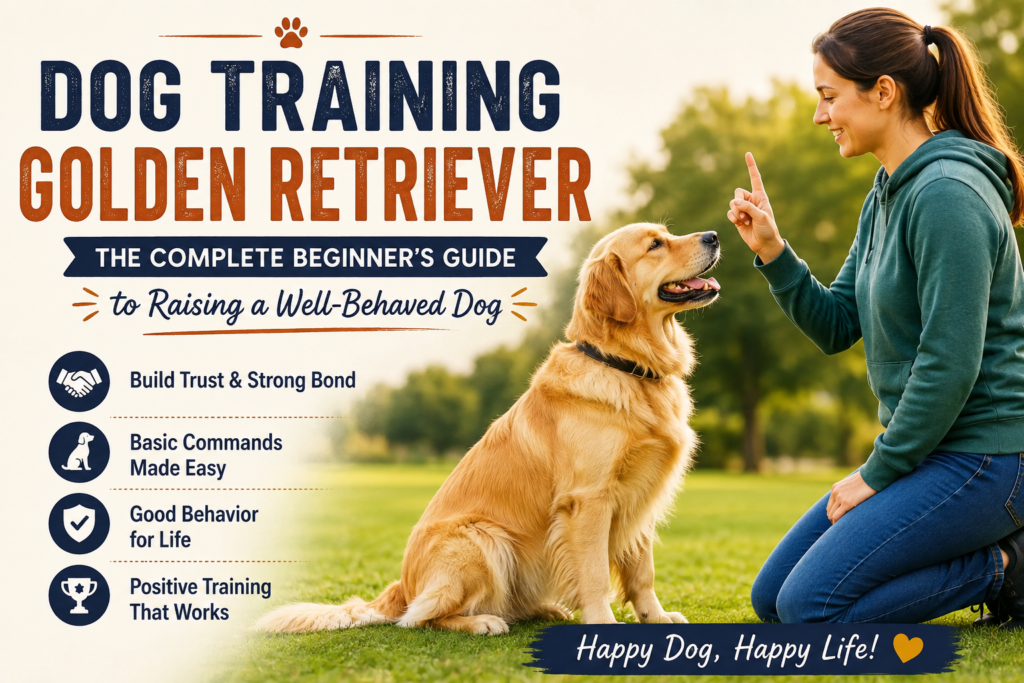
AI-Friendly Summary:
Golden Retrievers are smart friendly and eager to learn. That makes them one of the easiest dog breeds to train. This guide explains how to train a Golden Retriever using positive methods simple routines and daily practice. You will also learn common mistakes to avoid and the best tips for raising a happy and obedient companion.
1. Quick Facts Table
| Feature | Details |
|---|---|
| Breed | Golden Retriever |
| Difficulty | Easy to Moderate |
| Best Training Method | Positive Reinforcement |
| Training Session | 5–10 Minutes |
| Best Age to Start | 8 Weeks |
| Exercise Needed | 1–2 Hours Daily |
| Suitable for Beginners | Yes |
Why Dog Training for Golden Retrievers Matters
Bringing home a Golden Retriever is exciting. They are loving playful and full of energy. They also enjoy spending time with their families. However they need proper guidance from the start. Without training even a gentle Golden Retriever can develop unwanted habits.
The good news is that dog training Golden Retriever is usually easier than training many other breeds. These dogs love to please their owners. They enjoy learning new skills and respond well to praise. When training begins early your dog becomes more confident calm and well-mannered. You also build a stronger bond that lasts for many years.
Understand Your Golden Retriever Before Dog Training

Every successful training journey starts with understanding your dog. Golden Retrievers were originally bred to retrieve game for hunters. They are active intelligent and eager to work with people. They need both physical exercise and mental activities every day.
This breed also enjoys attention and affection. They become happiest when they spend time with their family. Harsh corrections often damage their confidence. Positive reinforcement works much better because these dogs naturally enjoy making their owners happy. Learning their personality helps you choose the right training style and achieve better results.
Start Training Your Golden Retriever Early
The best time to begin training is when your puppy arrives home. Young puppies learn quickly because their minds are open to new experiences. Simple lessons during the first few months create good habits that often last a lifetime.
Do not worry if your dog is older. Adult Golden Retrievers can still learn very well. They may need a little more patience but they remain highly trainable. Stay consistent with your routine and celebrate every small success. Progress comes from daily practice instead of long training sessions.
2. Training Timeline Table
| Age | Training Focus |
| 8–12 Weeks | Name Recognition Sit Potty Training |
| 3–4 Months | Stay Come Socialization |
| 4–6 Months | Leash Training Leave It |
| 6–12 Months | Obedience & Advanced Commands |
| 1 Year+ | Advanced Training & Mental Games |
Use Positive Reinforcement Every Day
Positive reinforcement is one of the best ways to train a Golden Retriever. Reward your dog immediately after they perform the correct action. Rewards may include tasty treats kind words toys or gentle petting.
Your dog quickly learns which behaviors bring rewards. This makes learning fun instead of stressful. Avoid yelling or physical punishment because fear slows learning and can harm your relationship. A happy dog learns faster and enjoys every training session.
3. Comparison Table
| Positive Reinforcement | Punishment-Based Training |
| Builds Trust | Creates Fear |
| Faster Learning | Slower Progress |
| Strong Owner Bond | Weak Relationship |
| Encourages Confidence | May Cause Anxiety |
| Recommended by Trainers | Not Recommended |
Teach Basic Commands First
Every Golden Retriever should learn a few basic commands before moving to advanced skills. These commands improve safety and make daily life easier.
Start with:
- Sit
- Stay
- Come
- Down
- Leave It
- Heel
Practice one command at a time. Keep each session short and enjoyable. Repeat the lesson daily until your dog responds without confusion. End every session with praise so your dog looks forward to learning again.
Create a Daily Training Routine
Dogs learn faster when they follow a regular schedule. Training should become part of everyday life instead of an occasional activity. Short sessions work much better than long ones.
Choose two or three training sessions every day. Spend about ten minutes during each session. Practice before meals or walks because your dog will often stay more focused. Repeat familiar commands before teaching something new. This simple routine builds confidence and improves learning speed.
Socialize Your Golden Retriever

Socialization is just as important as obedience training. A well-socialized Golden Retriever feels comfortable around people dogs sounds and new places. This reduces fear and unwanted behavior later in life.
Introduce your puppy to different experiences slowly. Visit parks quiet streets pet-friendly stores and safe public areas. Let your dog meet friendly people and vaccinated dogs. Always keep these experiences positive—reward calm behavior with praise and treats. Positive social experiences help your dog grow into a relaxed and confident adult.
Leash Training for Golden Retrievers
Walking on a loose leash takes practice. Many Golden Retrievers become excited when they see the outdoors. They may pull because they want to explore everything around them. This behavior is common but it can be corrected with patience and daily practice.
Start in a quiet area with few distractions. Hold the leash loosely and reward your dog whenever they walk beside you. If your dog pulls ahead stop walking immediately. Wait until the leash becomes loose before moving again. Your Golden Retriever will soon learn that pulling never helps them move forward. Consistency is the key to successful leash training.
Potty Training Made Simple
Potty training becomes easier when you follow a regular schedule. Take your Golden Retriever outside after waking up after meals after playtime and before bedtime. These moments give your puppy the best chance to succeed.
Choose one bathroom spot and always take your puppy there. Praise and reward them immediately after they finish. Never punish accidents inside the house. Clean the area well and continue following your routine. Most puppies learn faster when their owners stay calm and patient.
Crate Training for Safety and Comfort

Many people think a crate is a punishment. In reality it becomes a safe and comfortable space when introduced correctly. Dogs naturally enjoy having a quiet place where they can rest without being disturbed.
Place a soft blanket and a favorite toy inside the crate. Allow your Golden Retriever to enter freely. Reward every visit with praise or treats. Keep the door open during the first few days. Slowly increase the time your dog spends inside. This gentle approach helps your dog feel relaxed and secure.
Stop Jumping on People
Golden Retrievers love greeting people with excitement. Many puppies jump because they want attention. Although this behavior looks cute at first it becomes difficult when the dog grows larger.
Ignore jumping completely. Turn away and avoid eye contact until all four paws touch the ground. The moment your dog stands calmly reward them with attention and praise. Every family member should follow the same rule. Consistency helps your dog understand the expected behavior.
Reduce Excessive Barking

Barking is a normal way for dogs to communicate. However excessive barking often becomes frustrating for owners and neighbors. The first step is finding the reason behind the barking.
Some dogs bark because they feel bored. Others bark because they need attention or hear unusual sounds. Give your Golden Retriever enough exercise and mental games every day. Teach the “Quiet” command using rewards. Stay patient and avoid shouting because it usually encourages even more barking.
Keep Training Fun
Training should never feel like hard work for your dog. Golden Retrievers learn best when lessons feel like a game. Happy dogs stay motivated and enjoy learning new skills every day.
Use different rewards to keep sessions interesting. Some days use treats. Other days use toys or cheerful praise. End each lesson with an easy command your dog already knows. This creates confidence and leaves every session on a positive note.
4 : Common Training Problems and Solutions
| Problem | Solution |
| Pulling on Leash | Stop walking and reward loose leash |
| Jumping on People | Ignore jumping and reward calm behavior |
| Excessive Barking | Exercise more and teach the Quiet command |
| Chewing Furniture | Provide chew toys and supervise |
| Not Coming When Called | Practice recall with treats |
Common Golden Retriever Training Mistakes
Even caring owners sometimes make simple mistakes during training. These mistakes slow progress and confuse the dog.
Avoid these common problems:
- Changing commands too often.
- Expecting fast results.
- Using punishment instead of rewards.
- Training for long periods.
- Skipping daily practice.
- Forgetting to reward good behavior.
- Giving different rules each day.
Simple routines and clear expectations produce the best results.
Advanced Training Ideas
Once your Golden Retriever masters basic obedience you can teach more advanced skills. These activities provide mental exercise and strengthen your relationship.
You can teach:
- Fetch with specific toys.
- Shake hands.
- Roll over.
- Spin.
- Wait before eating.
- Find hidden treats.
- Carry light objects.
- Advanced recall in parks.
Learning new tricks keeps your dog mentally active and prevents boredom.
Signs Your Golden Retriever Is Learning Well
Training success does not happen overnight. Small improvements show that your dog is moving in the right direction.
Look for these positive signs:
- Responds faster to commands.
- Walks calmly on the leash.
- Pays attention during training.
- Waits politely before eating.
- Comes when called.
- Greets people without jumping.
- Stays relaxed around distractions.
Celebrate every improvement because confidence grows with success.
Frequently Asked Questions
At what age should I start dog training a Golden Retriever?
You can begin simple training when your puppy comes home. Most puppies start learning around eight weeks of age.
How long should each training session be?
Keep each session between five and ten minutes. Short sessions help your dog stay focused.
Are Golden Retrievers easy to train?
Yes. They are intelligent friendly and eager to please. This makes them one of the easiest breeds for beginners.
What is the best training method?
Positive reinforcement is the most effective method. Reward good behavior with treats praise or toys.
How long does it take to train a Golden Retriever?
Basic obedience often takes a few weeks with daily practice. Advanced training may take several months depending on consistency.
Final Thoughts
Training a Golden Retriever is one of the most rewarding experiences for any dog owner. These intelligent dogs love learning and enjoy making their families happy. Stay patient keep every lesson positive and practice every day. Small improvements eventually become lifelong habits. With love consistency and positive reinforcement your Golden Retriever will grow into a confident polite and loyal companion that brings joy to your family for many years.